


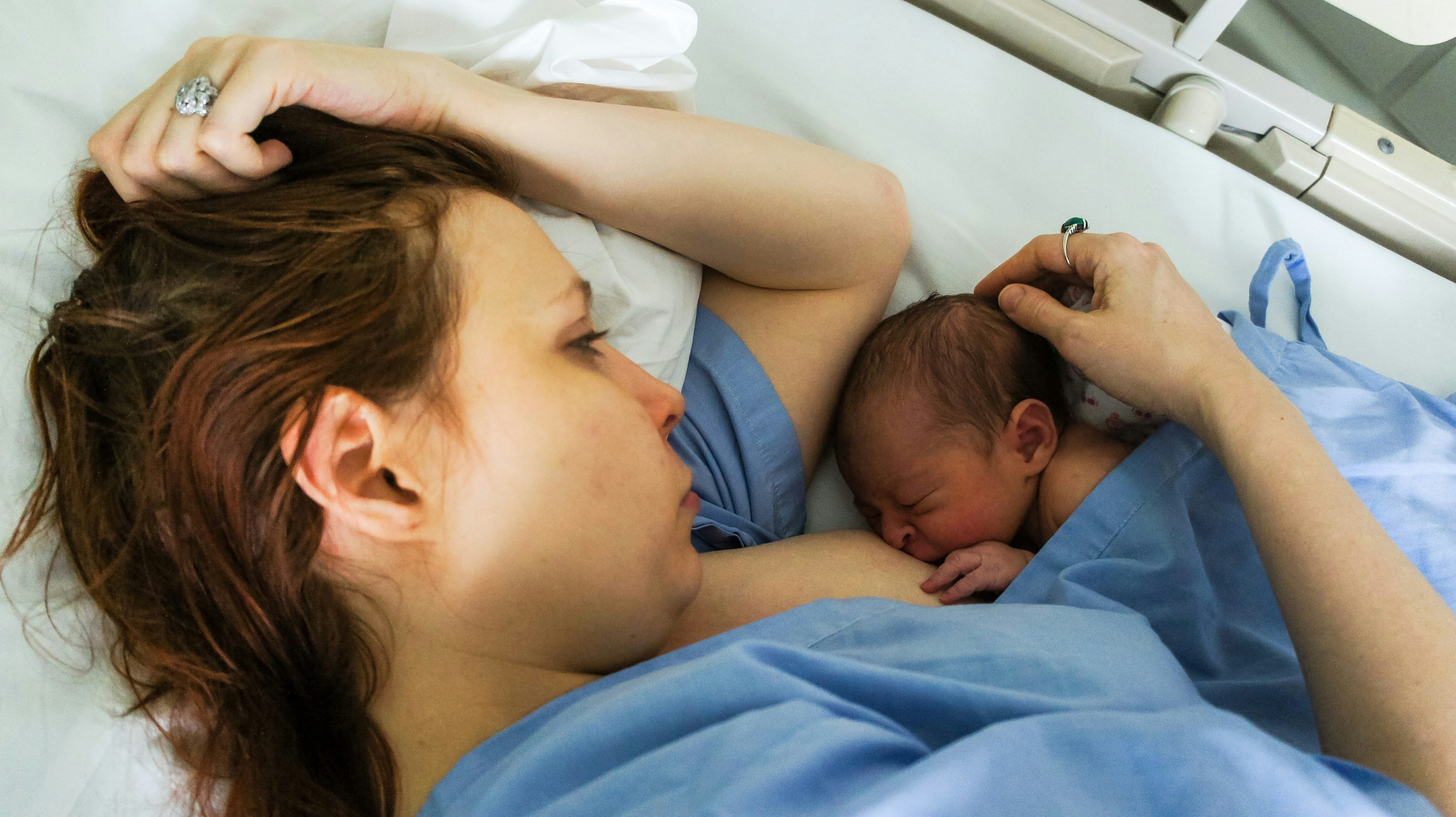
Given all the near-apocalyptic news stories we’ve been treated to over the last six months, you can be forgiven if you didn’t notice the recent Ockenden Report into ‘the biggest childbirth scandal in NHS history’, in which poor care in Nottingham Universities Hospital Trust led to ‘potentially avoidable’ outcomes in 444 cases, including 260 babies who died or were harmed.
Or perhaps you scrolled past it, thinking you’d read it already; and, in a way, you had. In 2015 Dr Bill Kirkup published a review into the ‘serious and shocking’ failures at Morecambe Bay; his report is best known for skewering a determination among midwives to ‘pursue normal childbirth “at any cost”’.¹ In 2022 Donna Ockenden published a review of the failings at the Shrewsbury and Telford trust; at the time, this was ‘the largest maternity scandal in NHS history’. And in the same year, Bill Kirkup (again) found ‘deplorable and harrowing’ failures in the maternity services in the East Kent NHS Trust.
The problems in maternity services have been picked over again and again (as Ockenden herself acknowledges in the introduction to her most recent report). We know that units are dangerously understaffed; that there’s an odd (and distinctly British) cultural split between midwives and other clinical professionals; and that the NHS is appallingly bad at learning lessons. We also know that mothers are getting older and fatter, which makes their pregnancies riskier. And we know that there’s a real resistance in maternity units to listening to what women are saying.
At the heart of Ockenden’s 2026 report into the Nottingham scandal is a detailed account of the birth and death of baby Harriet Hawkins, and the experiences of her mother Sarah, who is a medical professional (as is Harriet’s father, Jack). Harriet died during an extremely long labour. Here are some extracts from the report’s account of the four days it took to admit Sarah to hospital:
[Day 1; Sarah was just over 40 weeks pregnant; antenatal appointment] Sarah had experienced contractions overnight… Sarah expressed concern that she might not be admitted [to hospital] when she felt she needed to be. Sarah recalls being told that “they normally wait until you call three times, and then they have to bring you in if you feel like you need to be admitted”.
[Day 1, 8.30pm; Sarah is seen in the maternity unit] Sarah recalls being told she was not in labour… Sarah [recalls] that during this time she had 3 painful contractions in 10 minutes… and was told it did not matter… Sarah agreed to go home.
[Day 2, 12:04pm, phone call] Sarah and Jack called to say contractions were continuing, and that Sarah had not slept; she had been contracting without a break and contractions were coming every 3 minutes. Sarah recalls being told they were not regular enough [and] to eat jelly babies… Sarah reports that when she was asked if her baby was moving normally, she said, “I’m not sure because I’m in so much pain, I can’t tell” and the midwife told her that was normal in latent labour.
[Day 3, 3.27pm; phone call] It was documented Sarah was contracting 1:10 lasting 60 seconds… Sarah disputes this record, remembering that she felt her contractions were more frequent than this… Sarah should have been invited in at this phone call.
[Day 4, 12.14am; phone call] It was recorded that there was ‘PV bleeding’ (meaning that Sarah was bleeding vaginally). Sarah does not recall this, and in the Review Team’s collective experience it has the mark of a record made in order to be able to defend a decision to invite a woman in if challenged by colleagues. Sarah was advised to attend hospital.
There is a lot more in the same vein after Sarah Hawkins was admitted to hospital, but this post can only be so long. The point is, she was in a huge amount of pain, having strong contractions for days on end, and kept begging for medical attention; and in return she was told she wasn’t in labour, that she should stay at home, and that things would be OK if she would only eat jelly beans. Sarah is herself, remember, medically qualified.
Labour units are places in which most women come to do something pretty straightforward and medically unremarkable, and some number of women — unknowable in advance — come to have a life-threatening medical emergency. Combined with hellish resource constraints, in badly run units this produces a culture in which women are not so much ignored as actively disbelieved. I suspect this is the only way the staff can cope with the dissonance of being unable to provide safe care, but every scrap of anecdotal evidence about women’s experiences in maternity services reveals that for some staff, it has become second nature. (When I was being stitched up with insufficient anaesthetic after having my second son, I told the midwife ‘You’re hurting me’ and she replied ‘No I’m not.’) A woman’s account of her own experience is much more easily dismissed than the fact you have run out of both beds and fucks. After all, birth is the most natural thing in the world, isn’t it? Thousands of women do it every day.
Maternity care requires NHS professionals to work with women who are, fundamentally, entirely well, and entirely capable of taking active decisions about their own care — until, suddenly, they’re not. In his drippingly misogynist memoir about working in obstetrics, This Is Going to Hurt (2017), Adam McKay is repeatedly enraged by women who have the unparalleled cheek to regard themselves as competent adults.
This persistent view of pregnant and labouring women — that they are, essentially, selfish, foolish and unreliable — has, unsurprisingly, provoked political resistance. Take the evolving politics of the episiotomy, a deliberate surgical cut between the vagina and the anus that makes a wider opening for a baby’s head and shoulders. In the 1950s and 1960s episiotomies were absolutely standard in British hospitals, as was a full pubic shave; women would, as a matter of course, be shaved and cut before they went into active labour, whether they turned out to need it or not.
Then, a bunch of feminist midwives and activists (most notably, in the UK, Sheila Kitzinger) and a few oddball/argumentative obstetricians pointed out universal episiotomies were indefensible on the ‘do no harm’ principle. They are, obviously, incredibly painful; imagine being given a deep scalpel cut to your bumhole, being required to shit a pristine cantaloupe melon, and then being sent home with some general advice to take paracetamol and eat prunes. They also carry some long-term risks.
Combined with developments in medical research, this activism was successful; medical advice has changed, and rates have dropped hugely. And, along the way, episiotomies accrued an explicit political valence. When I came into this picture in the 2000s, the standard feminist talking point was that episiotomies were anti-woman. And so I was scunnered when, in conversation with a thoughtful and humane (female) genito-urinary surgeon with an interest in birth trauma, I was told that the episiotomies remained one of the best ways to prevent severe anal—vaginal tears. For some women, they are absolutely the best choice. But the problem has turned through 180 degrees; now, practitioners have to fight against the impression that episiotomies are an indicator of poor and borderline misogynist practice. As with spontaneous vaginal delivery (more commonly known as ‘normal’ or ‘natural’ birth), a third-hand version of feminist analysis leaked into areas where it had no business going, and women like me — articulate, interested, mardy, but entirely medically unqualified — are turning up in maternity wards with ill-informed opinions.
But this is what happens when an appreciably large proportion of medics simply refuse to recognise the fundamental competence of their patients. The whole ‘natural birth’ movement was provoked into existence by the damage being done to women’s bodies, and in Morecambe Bay it ended up sacrificing women and babies on the altar of ‘natural’, non-medicalised care. Somehow, women lost out both ways.
Almost uniquely in medical care, maternity concerns not one but (at least) two linked patients, whose needs are simultaneously separate and entangled. Usually their medical interests will align, but sometimes they will not. To take a very small example, when I had hyperemesis (uncontrollable vomiting) during both my pregnancies, my need to eat food conflicted with my babies’ needs to avoid anti-nausea medication that might harm them. (Early-gestation foetuses don’t really require the mother to eat food; they just need her to occasionally hold down a glass of water.) An unborn baby in distress just needs to get born, but their mother might be appallingly damaged by the instruments used to extract them.
A pregnant woman is like a quantum particle simultaneously occupying contradictory states: single and dual, well and unwell; both one patient and two patients, potentially routine and potentially emergent. I think medics, like everybody else, get a little fried by this; it doesn’t fit the available frameworks. In the absence of compassion and good practice, it translates into a general reluctance to view a pregnant woman as a discrete individual; someone who has the same full and absolute rights as any other patient, and someone whose account of her own experience can be believed. When you combine these things with dangerously low resources, you have a recipe for disaster.
I’m not saying that any of this is easy. On the contrary: I’m saying that all of this is very bloody difficult. When it comes to resources I am of the ‘just pump in billions of pounds’ persuasion, but then I don’t have to take the Winter Fuel Allowance away from pensioners while hoping to win the next election.
But I am saying that the NHS must come to terms with the fact that pregnant women are intelligent, autonomous human beings who tell the truth about how they’re feeling, and who have an absolute right to consent or not consent to any procedure. Something very big has to shift in the culture of maternity services; review after review, tragedy after tragedy has shown how horribly persistent this culture is, and how badly it needs to change. So maybe it needs a big bang moment.
After Bill Kirkup’s Morecambe Bay report, NHS England set up something called the National Maternity Review, an expert panel of medics and stakeholders that was given the brief of examining the state of maternity services and recommending ways to improve safety. There’s no reason you should have heard of it; I only know about it because, as a representative of Mumsnet, I was a member of the panel. My role was to help to reflect the views and experiences of ‘service users’ — that is, pregnant and postpartum women. And let me tell you: it was a bit of a struggle, and I don’t think I did it very well. The outcomes were certainly disappointing.
What I really remember about the National Maternity Review is the day we opened the discussion about ‘birth choices’. This is medic-speak for the decisions that pregnant women make about how and where they give birth, and the options we were discussing were: at home, in a birthing centre, in a labour suite in hospital. And I got up on my hind legs and asked why — given that everyone on the panel was talking so much about how choice was really important — we weren’t discussing the option of letting women choose elective caesarians. This mild (I thought) suggestion provoked real, puce-faced outrage from one of the obstetricians on the panel, and was politely ignored by everyone else, as though I’d just poured coffee over my head.
This kneejerk flinch is exactly why I think Yvette Cooper, the new Secretary of State for Health, should instruct the NHS to offer elective caesarians to all pregnant women: not for ‘good’ medical reasons, but just if — after a proper examination of the risks and benefits — that’s what they want. Yes, there are downsides (and it would, of course, be expensive); but that’s partly the point. Patients are allowed to make choices that medics don’t want them to make. And until pregnant women are truly conceived of as discrete and competent service users, I’m very much afraid we’re just going to keep on getting news stories about ‘the biggest maternity scandal in the history of the NHS’.
In case you haven’t had enough on birth injuries today, there’s always Rachel Weisz’s version of Dead Ringers.
Dead Ringers

Back in the days when I used to work for Mumsnet, there was a specific tension that often made things extremely tricky. This tension wasn’t (mostly) within the staff, or between the staff and the users. It was between us as a collective and the outside world. Specifically, it was between the fluent, detailed way the users …
I have nothing useful to say about maternity services for obvious reasons, but if you look at the repeated scandal/inquiry/“never again” loop in learning disability services you see the same pattern and arguably the same causes. (The extraordinary work of Sara Ryan is exemplary here). So the question is, what would bring about positive change? Because inquiries don’t, and it looks as if “politics as usual” can’t. (Also, the popular success of Adam Kay mystifies me).
Well said, Rowan! This piece has successfully made me angry about things I didn’t realise I was angry about! I have too many thoughts to articulate really but as I was reading this, I just kept thinking of The Yellow Wallpaper and how we really haven’t come that far!