


SPOILER WARNING:
The Pitt was first broadcast in the US 18 months ago, but thanks to the perverse incentives of competing streaming services it has only just become available in the UK. This piece contains some spoilers, including for later episodes of the second season.
I generally enjoy using Bluesky, the ‘progressive’ micro-blogging alternative to X, but it has to be said that it is often a little insane (as opposed to X, which is often a lot insane). Even among the mostly temperate centre-left people I follow, there is now a furious anti-Americanism that I haven’t seen in the wild since the fights over missile deployment at Greenham Common in the ‘80s. I’ve seen British centrist dads talking about how they’re gleefully haranguing random US tourists in holiday hotspots, and European academics saying that any American not engaged in active insurrection is a collaborator.
It reminds me of how I felt after the Brexit vote, when good liberals around the world suddenly decided that all Brits were mad, stupid and self-aggrandising. It was a desolate feeling. How much worse that feeling must be if you’re an American progressive under Trump.
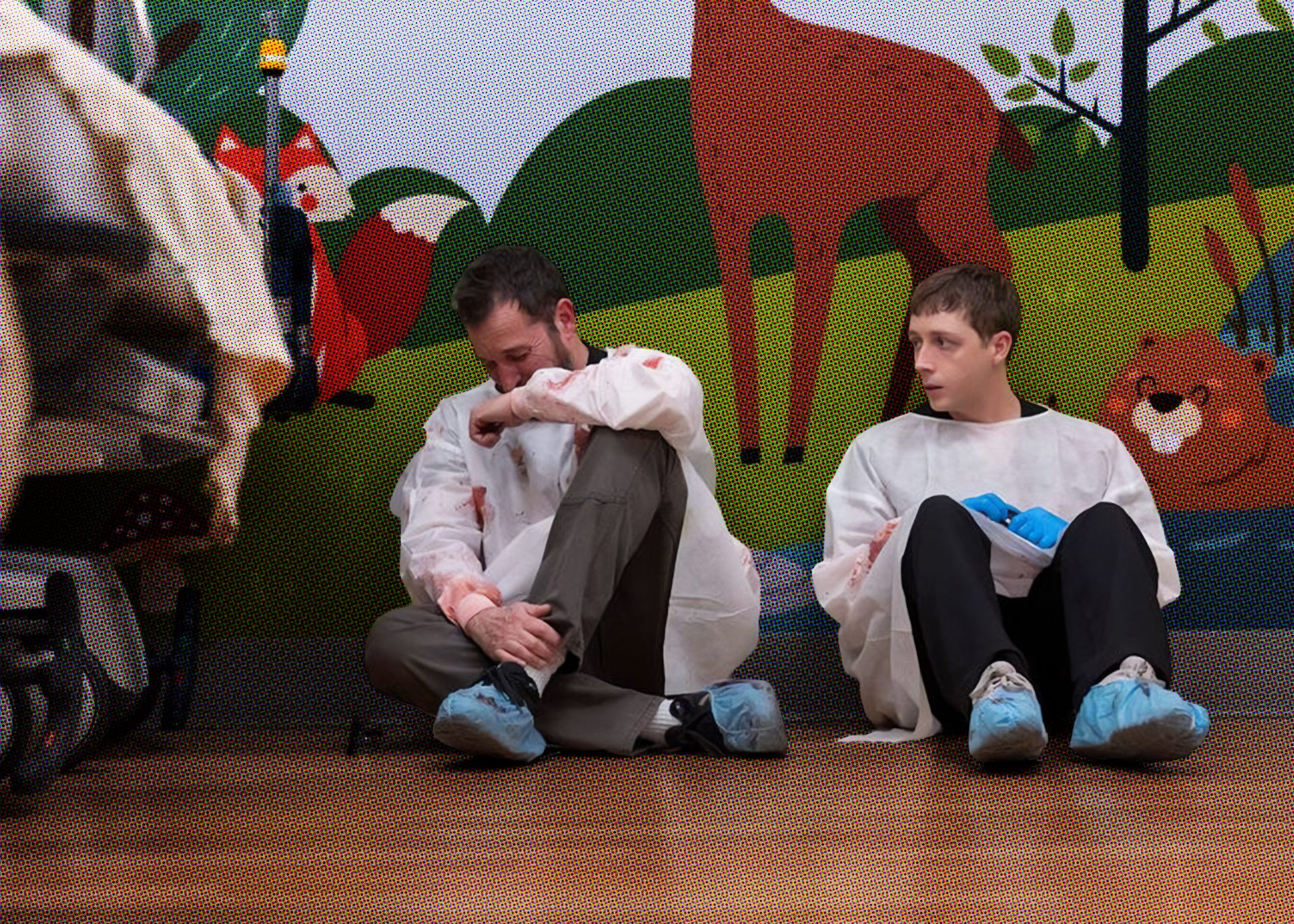
I’ve been thinking about this while watching The Pitt (HBO). The Pitt is a hospital drama; more specifically, it is a very, very thinly disguised successor to ER (so thinly disguised that it is now the subject of a lawsuit by the estate of ER creator Michael Crichton). It even stars Noah Wyle (the young Dr Carter in ER) as a now-grizzled head of an emergency department in a hospital in Pittsburgh, essentially extending the ER universe 30 years into the future.
The Pitt made me think about the experience of US progressives because, like ER, The Pitt is structurally ‘progressive’. More than any other kind of medicine, emergency care is perfect for illustrating the contingency of fate (we’re all one badly-placed ladder away from dependency). Progressive positions are inherent in The Pitt’s dramatisation of vulnerability and care, and the injustices of low wages, poor living standards and commercialised healthcare. It also illustrates the merits of funding public services through general taxation, without which (in emergency departments) people literally and quickly die.
Like ER, The Pitt uses the medical emergency as a metaphor for America. A trauma department can plausibly host pretty much anyone, from rednecks and frat boys to selfless carers and homeless people (carefully referred to, in the ever-changing lexicon of the liberal left, as ‘unhoused’). This allows all kinds of political issues to be miniaturised and dramatised. Hell, the second season is set on the actual Fourth of July and features several walking metaphors, including a sunburned woman in a Stars and Stripes bikini and a guy who’s been impaled on a literal flag. (Each season of The Pitt takes place over one day, like 24.)
Patients arrive with conditions that have worsened because they have lost Medicaid; they leave against medical advice because they cannot afford bills for ongoing hospital care. There are storylines about the experiences of people with disabilities, people with mental health difficulties, women who’ve experienced violence, and Black and trans women’s specific experiences in healthcare. Immigrant families are shown to have fewer resources than established American families. Clinicians are shown enduring insanely long hours and low wages; one student doctor is squatting in an unused ward because he can’t afford to pay rent. The focus is on the American system’s failure to recognise interdependency, support vulnerable people, fund healthcare, and value people’s identities.
So far, so ER, which had plotlines about the cruel insufficiency of the US health insurance system, and which was one of the first mega-shows to frankly portray racism and its souring effects on a diverse population. ER, too, had plotlines about sexual violence, trans women and Black women; it showed major characters with physical disabilities and learning difficulties, and tried to portray the extra hurdles they faced in accessing healthcare. As for healthcare workers, the pilot episode had Dr Benton — Dr Carter’s mentor — noting that ‘we work 36 hours on, 18 off, which is 90 hours a week, 52 weeks a year. For that, we are paid $23,739 before taxes.’
Watching ER now, though, the differences with The Pitt are stark. For ER, politics was only ever one part of the dramatic mix; the ‘90s, in the west, were a time of relative political quietude, and the show was as concerned with the staff’s romantic attachments as it was with the national psyche; the over-arching plotline in the first season was whether Nurse Carol would or would not get back together with Dr Ross. As we have discussed before it was, in effect, a soap.
The Pitt is so, so much bleaker. Its only interest in its characters’ personal lives is to show us how dysfunctional they are; there is much less banter, and no kissing. Instead it places politics front and centre. Fundamentally, it is deliberately dramatising the despair (and ineffectiveness) of the American progressive left under Trump in this specific political moment.
The main characters are all well educated and in secure work; they are all disciplined, effective people who are accustomed to working hard and reaping appropriate results. And they are all finding that, nevertheless, their daily environment is hostile, chaotic, cruel and unsafe. (The second season features a violent incursion by ICE agents that has immigrant workers and patients running for the exits.) They are all (by virtue of the specialism and workplace they have chosen) personally committed to the values of equality and compassion; and they are all working within a larger system that expressly contradicts their values. Tell me this isn’t a metaphor for the most visible parts of the anti-Trump coalition: Democrats, campus protestors, academics, posters on Bluesky; lesbian moms and literal medics on the streets of Minneapolis.
Like progressives everywhere, the staff at The Pitt are explicitly unable to cope with the catastrophic upending of their expectations: the social cruelty, the injustice, the profit-driven decision making. Suicidality is addressed many times, as is paralysing anxiety. One of the most remarked-upon scenes in the first season shows Noah Wyle’s character, Dr Robby, having a panic attack. In Season 2, it’s the turn of one of his younger staff members, a woman in her 30s, to collapse in emotional distress while at work. In explanation, she speaks for all progressives, and young progressives most of all: ‘I’m doing everything right, it’s everything around me that’s all fucked up… I had it all planned out, and now everything’s out the window.’ Despite experiencing the same symptoms so recently himself, Dr Robby dismisses his distressed staff member as a ‘fucking liability’.
The Pitt isn’t afraid to address the generational tension within the progressive movement. Robby and his friend Nurse Dana are the Gen Xers in the Pitt; they have seen a little too much, and they have been unable to change anything much for the better in the last 30 years. (Indeed, The Pitt shows many things as having got expressly worse since ER.) Worse, as the line from It’s A Wonderful Life has it: they’re discouraged. They have lost their hope, and don’t know how to offer any to their younger allies.
Robby eventually apologises to his anxious staff member for being ‘a dick’, but immediately returns to his obsession with workrate, and the merits of effectiveness over empathy: ‘now, I need you to stop feeling sorry for yourself and focus back on your patients’. And, many times, the series dramatises the benefits of experience and a cool head; the older staff do know useful things that the younger staff don’t know.
To a young student who becomes tearful while treating a dying patient, Robby advises that ‘as professionals, we have to create emotional boundaries for ourselves.’ This is true when performing a difficult technical procedure under pressure, but we are shown that it is also profoundly damaging in other contexts. Robby’s attempts at professional cauterisation are botched at best, and have terrible consequences for his own health. His idea of creating a boundary is to deny his fear and anger while shouting at his staff. A Boomer nurse has even less understanding of progressive Millennial and Gen Z angst; for her, they are all simply ‘fucking snowflakes’. ‘I’m not sure this environment is healthy for anybody,’ remarks a Gen Z medical student having a very bad day. Well, that’s unchecked right-wing authoritarianism for you.
‘A lot of what happens around here isn’t right’ Robby says at one point, in a tone that suggests everyone should suck it up. When a peer tries to work the system to protect a vulnerable patient, he says the quiet part out loud: ‘This is not about social justice!’ But the younger staff members are not ready to accept that things are as they are; they are not numb or defeated. They are consciously furious, and disgusted by the Gen Xers’ willingness to make small compromises with a brutal system. They also find older staffers significantly lacking in fellow-feeling and solidarity. As one young doctor remarks, ‘Everyone here talks about “community” and “family,” and then they throw you under the bus.’
Even worse for Gen Xers’ self-esteem, the Gen Zers and Millennials have noticed that Gen Xers are old, and they explicitly find them tedious. If the Gen Xers think the young staff are snowflakes (although they are too PC to say so out loud), the young staff think the Gen Xers are useless and senseless, offensive and mistaken. Their contempt is held in check only by their understanding that the Gen Xers are — for now — technically in charge. They are, mostly, just waiting for us to fuck the fuck off so that they can start to fix the things they think we’ve broken.
Even our stories about the early internet have lost what little charm they had. A major plot point in S2 has the hospital computer systems going offline; suddenly (in a deliberate nod, again, to ER) everything must be done on paper and clipboards and x-ray film. Older staff members (and older viewers) are relatively happy; this is a world they command, a warm bath of nostalgia for the days of Doug and Carol. But the younger staffers are just impatient. Without the fond memories, this technological time warp offers only inconvenience and difficulty. When Robby attempts to patronise a Gen Z student by starting a sentence with ‘When I was at medical school…’ she impatiently shuts him up: ‘...you didn’t have cell phones, or TikTok, or armed ICE agents. I get it.’ Robby is reduced to muttering to himself: ‘Actually, we did have cell phones. Although not at the beginning.’
Dr Robby is the hero of The Pitt, but he’s a very post-COVID hero: not just flawed but actively broken, unpredictable, angry and occasionally malicious. He is reluctant to hand over to his replacement as he heads off for a three-month sabbatical; it is not a coincidence that this replacement is younger, browner and a lot more female. He explicitly believes that he is the only person capable of doing his job. ‘White knight, white noise’, as one Black doctor says behind his back.
In the first season of ER viewers were repeatedly asked to think about the line between confidence and over-confidence. If a medic is under-confident, they will fail to act decisively; if they have too much misplaced faith in their abilities, they risk killing people. Damage is done either way.
The Pitt too has a dilemma for viewers: how do you properly resolve the tension between empathy and effectiveness? Too much empathy produces panic and paralysis; Millennial and Gen Z staff members are shown zoning out, frozen in horror, or running off into corners to cry. They have fidget toys and noise-cancelling earbuds; they listen to playlists of rain sounds and watch calming abstract videos. All of this, it is implied, is because they are so vividly experiencing the pain and distress caused by a system they cannot control.
As coping strategies go, are these things better or worse than emotional cauterisation? Is it better to feel everything, to ‘stay woke’ at the expense of tactical advantage? Or is it better — as the older staff members do — to develop tunnel vision, to focus on what you can control; to find immediate, attainable solutions to smaller, less structural problems; to stem the bleeding, and pass the problem up the line? Is structural inequity an urgent priority or an impractically vast abstraction? If only we could answer this question to our own satisfaction.
More earlier Noah Wyle adventures in medicine:
ER (1994 - 2009)

TV and radio are are little boxes full of many kinds of friends: informative friends, entertaining friends, distracting friends, friends who just won’t shut up and go away. In our semi-regular TV re-watch feature, we take this metaphor and chases it into the ground with deadly intent.
Netflix should so a show on the far superior Canadian system of socialized medicine. Plot lines about people dying on years-long waiting lists for routine procedures. Or about the fact that the entire country has fewer MRI machines than does Atlanta (despite spending more per capita on healthcare than almost any country on earth besides America). The season finale could be the depressed teenager who is offered MAiD and successfully euthanized as her anguished parents are held by security guards outside the hospital.
The Pitt seems pretty histrionic and detached from reality. "Healthcare is too expensive, but medical staff are vastly underpaid" (despite being paid more than anywhere else in the world... the average registered nurse in NYC makes $112k a year). How does one square that circle? Well, you can't because it is all polemical nonsense and lies.