


Elevator pitch
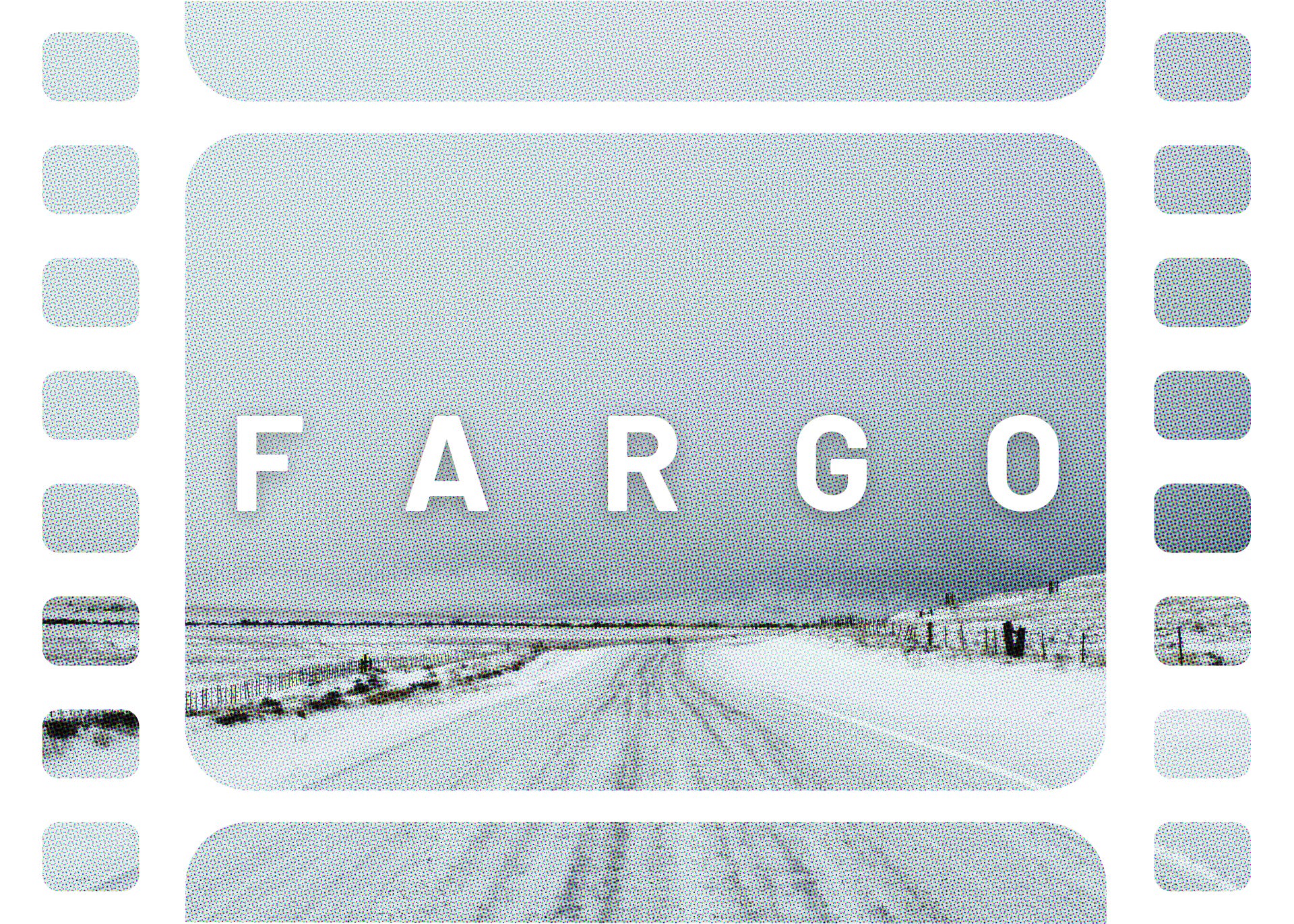
Jerry Lundegaard (William H. Macy) needs money desperately, so concocts a plan to extract some from his wealthy father-in-law; he arranges to have his wife kidnapped by lowlives Carl Showalter (Steve Buscemi) and Gaear Grimsrud (Peter Stormare), with whom he will split the ransom money. Carl and Gaear, however, are stupidly violent and violently stupid (this is a Coen Brothers film, after all). Their antics catch the attention of heavily pregnant police chief Marge Gunderson (Frances McDormand), who proves to be as competent as everyone else is not.
‘This is a true story. The events depicted in this film took place in Minnesota in 1987. At the request of the survivors, the names have been changed. Out of respect for the dead, the rest has been told exactly as it occurred.’
Of course, this isn’t true. Everything in Fargo is a fiction, including the opening caption claiming that it isn’t.
In 2001 the body of Takako Konishi, a Japanese office worker, was found in the snow outside Detroit Lakes, Minnesota. A Brainerd police officer told the press that she had previously approached him asking about Fargo. He got the impression she had gone looking for the ransom money buried by Steve Buscemi’s character; but she had been unprepared for the brutal Minnesota winter weather. In other words, Takako Konishi died because the Coen Brothers lied.
Except she didn’t.
Because the explanation that Takako Konishi had been looking for the ransom money from Fargo was also made up. The police officer had misunderstood her, and — having seen Fargo himself — leapt to the wrong conclusion. Takako Konishi was depressed, and had a drinking problem; she had sent a suicide note to her parents. She had a very real, tragic reason for going out into the snow alone. But the fictional version took hold, because it is perfectly apt. The plot of Fargo is driven by greed, and it is full of mistakes, tragedy and bizarre deaths. It also has a complex relationship with fact and its own reality as a movie.
This is not uncommon with the Coen Brothers. They are notorious for never giving straight answers or insights into their films, remaining wry and inscrutable. Much of what they assert is fiction, even when it comes to what happens behind the camera; Fargo’s credits claim that the film was edited by Roderick Jaynes, an eccentric Englishman who prefers watching cricket to going to the Oscars. But Roderick Jaynes is Joel and Ethan Coen. Probably.
Even their films are not quite their films. Oh Brother, Where Art Thou? (2000) is the film that John L. Sullivan never makes in Preston Sturges’ Sullivan’s Travels (1941). The Hudsucker Proxy (1994) is a Frank Capra Christmas movie run through a 1950s management efficiency programme. The Big Lebowski (1998) is Raymond Chandler’s The Big Sleep (1939) viewed through a haze of dope. Fargo doesn’t even take place in Fargo; the Coens claim they just thought it was a good title.
Fargo is a kind of a parody of contemporary crime movies. It takes the violence and greed of similarly one-named, hard-boiled films like Heat and Seven (both 1995) and transplants them to the Minnesota-nice suburbs, all wide fields and wide vowels, brown food and brown interiors. It is a movie — like so many Coen Brothers movies — about movies. It is a movie that knows it’s a movie. But the Coens know, also, that movies aren’t just movies; the Brainerd cop’s mistaken interpretation of Takako Konishi’s actions shows that they leach into reality. Fargo is ‘told exactly as it occured’ in the script. Which is better than real life, any day.
Delights
When writing about Coen Brothers films it is customary to talk about the script (‘Sir, you have no call to get snippy with me’), the performances (William H. Macy’s stupendous unravelling as Jerry, all tight smiles and seething hysteria), and the vicious Looney Tunes physical comedy (the kidnapped Jean Lundegaard’s panicked lurching with a bag over her head). But we all know about those.
So instead let’s talk about Carter Burwell, a regular Coen Brothers collaborator. He takes the theme from a Norwegian folk song ‘Den bortkomne sauen’ (‘The Lost Sheep’, a splendidly on-the-nose reference) and walks it through some wonderful transformations: from melancholy and lonesome, to sinister and threatening, to big and dramatic. It acts as a counterpoint, imparting atmosphere to banal interiors and seriousness to slapstick shenanigans; and it carries the weight of the genuine emotion so carefully suppressed by the restrained Midwesterners. The film may often seem ludicrous or cruel, but the music insists on an emotional truth.
Discomforts
A frequent criticism of the Coen Brothers is that they are shallow movie brats: sixth-form Tarantinos who know nothing of the world beyond the foyer. They make movies that have nothing to say, and make an awful lot of fuss not saying it. Their output is just an amusing entertainment for the bohemian bourgeoisie.1
And this isn’t entirely wrong; the Coen Brothers were beneficiaries of the same ‘90s indie cinema boom that brought us Tarantino, and they have some of the same period affect. It’s partly what made them so popular with the Quotation Generation: media-literate, disaffected and cynical twenty-somethings who thought that the only thing worse than selling out was taking yourself seriously enough to sell out.
If you take their publicity appearances at face value, this appears to be the Brothers’ opinion of their own work. Their evasive responses to serious questions, their self-deprecatory jokes, their meta-fictional mucking about; it all seems to point to people who are in it purely for the LOLs. But as any ‘90s Gen Xer (or, indeed, anyone who’s been in their twenties at some point) could tell you, that’s what you would do if you wanted to hide how emotionally invested you are.
Can We Show The Kids?
The Metropolitan kids discovered the Coen Brothers for themselves, and wanted to show The Ballad of Buster Scruggs (2018) to us, so I think it’s safe to say they’re up for it. When we showed one of them Fargo, his immediate reaction was: ‘But they’re all idiots, apart from her!’, so I think it’s safe to say they also get it. They are all idiots apart from Marge (and her husband Norm), which is absolutely the point.
Is It Still Worth It?
The actual city of Fargo was originally two cities called Fargo. ‘Fargo on the Prairie’ was built by engineers of the Northern Pacific railroad; it was a family-oriented settlement, staid and conformist. ‘Fargo in the Timber’, down towards the Red River, was a lawless place of bordellos and saloons. The two communities were frequently at odds. One splendidly Coen Brothers-esque story has a sleigh driver bringing goods to ‘Prairie’ having his load progressively lightened as he passed through ‘Timber’, so that he eventually arrived with nothing.
In the end, the Lake Superior and Puget Sound Company told the US Army that the residents of ‘Fargo in the Timber’ were selling alcohol to Indigenous Americans, and the residents of Timber were turned out of their land. In other words, the story of the city of Fargo is the myth of the American West: rugged frontiersmen tamed the landscape, and the gentrified city folks tamed the rugged frontiersmen. The city is, after all, named after William Fargo, the founder of Wells Fargo Express Company, which linked the grizzled prospectors of the California Gold Rush to the tail-coated East Coast bankers. He forged a direct connection between the American dream of self-sufficient independence and get-rich-quick endeavour, and the American ideal of the city on the hill; a bright and shining republic of honest, upright citizens, democratically decided laws and universal freedoms.
This tension runs all the way through Fargo. As the child pointed out: they’re all idiots. More specifically, they’re greedy idiots. Jerry Lundegaard is willing to have his wife kidnapped to get the money he needs to buy his own car lot. His father-in-law, Wade Gustafson, is willing to screw over his own son-in-law to get the lot for himself. Carl Showalter is willing to kill people for a brand new car.2 The drive to succeed has not just driven them all mad; it has driven all humanity from them. Jerry’s unravelling is the dramatisation of what happens when these two images of America meet; when an average man tries to be an entrepreneurial success, and discovers that himself and his aspirations are incompatible. It is the incompatibility that maddens him.
The only ones who aren’t mad are police chief Marge and her husband Norm. It is relevant that Marge works in public service, and Norm is an artist. Their ideas of success aren’t related to money; they are about social impact. They are about putting violent people behind bars, and getting Norm’s painting of ducks on a three cent stamp (‘Every time they raise the darned postage, people need the little stamps!’) As Marge says to Gaear at the end, listing his murders: ‘And for what? For a little bit of money… There’s more to life than money, you know.’
To some extent this is, of course, a mirror of the Coen Brothers’ own experience. After the artistic successes of their early films, the Hollywood producer Joel Silver gave them a massive budget. Might this be the moment that they finally broke through into the mainstream? No. The budget was spent on The Hudsucker Proxy (1994), and it bombed. They made Fargo for around a quarter of the budget of Hudsucker, prioritising their art over financial success; and it took almost ten times as much as Hudsucker at the box office, a genuine success in anyone’s evaluation.
At the end of Fargo Gaear is visually rhymed with the statue of Paul Bunyan that opens the film; both are in red plaid shirts, both are wielding an axe. Bunyan is a figure from North American folklore, a giant lumberjack of astonishing skill and appetites. As such he is a great symbol of American frontier masculinity: physical, independent and successful. But there is some debate about whether the tale of Paul Bunyan is genuine folklore, or whether it was dreamed up by the publicity department of a logging company; the latter explanation would possibly make him the most American character of all.
Fargo suggests that American frontier masculinity is less Paul Bunyan than Gaear Grimsrud: withdrawn, psychopathic, driven solely by greed. And it tells us that those stories we are assured are true — masculinity, material success, folklore, the script of Fargo, the American dream — might be worth questioning.
For more Minnesota Nice, you could always try a trip to Lake Wobegon.

Obviously, being something of a BoBo myself, I don’t have much of a problem with this. I don’t see why I am less entitled to amusing entertainment than anyone else.
I suspect the obsession the film has with cars — the ultimate symbol of individualist expression and consumer choice — is no coincidence
The unreliable narrator coming up again and again, perhaps this is also a Coen Brothers leitmotif
Lovely piece - nailed the tension between postmodernity and sincerity that makes them sing.