



An early reality TV series in which neighbours are challenged to redecorate each other’s homes in a limited time period and with a limited budget. They can call on the resources of carpenter ‘Handy’ Andy Kane and presenter Carol ‘nominative determinism’ Smillie. They also have the help [citation needed] of one of a suite of interior designers: jumpy cool mum Linda Barker, hip head girl Anna Ryder Richardson, or foppish spaniel-man Laurence Llewelyn-Bowen. The remodelling is done in secret, with each episode ending with the grand reveal to the other team, who are now going to have to eat dinner under a chandelier made out of a colander.
Rooms
In the late ‘90s some friends needed furniture for their new offices and that, inevitably, meant a trip to the fabled two towers of Croydon IKEA. Equally inevitably, that meant getting lost in Thornton Heath. Eventually, like Sam and Frodo trying to reach Minas Morgul, they had to ask a passer-by for directions. This South London Faramir was holding two differently flavoured Bacardi Breezers, with which he gestured as he said: ‘Keep going till you get to a little fuck-off. Then go left. Then there’ll be another little fuck-off, where you go right.’
Once they had discovered that a ‘little fuck-off’ was a mini-roundabout, the directions from the Bacardi Geezer — like a friendly ranger of Gondor — came good. Instead of killing a giant spider, on reaching IKEA they bought (also inevitably) a blue sofa.
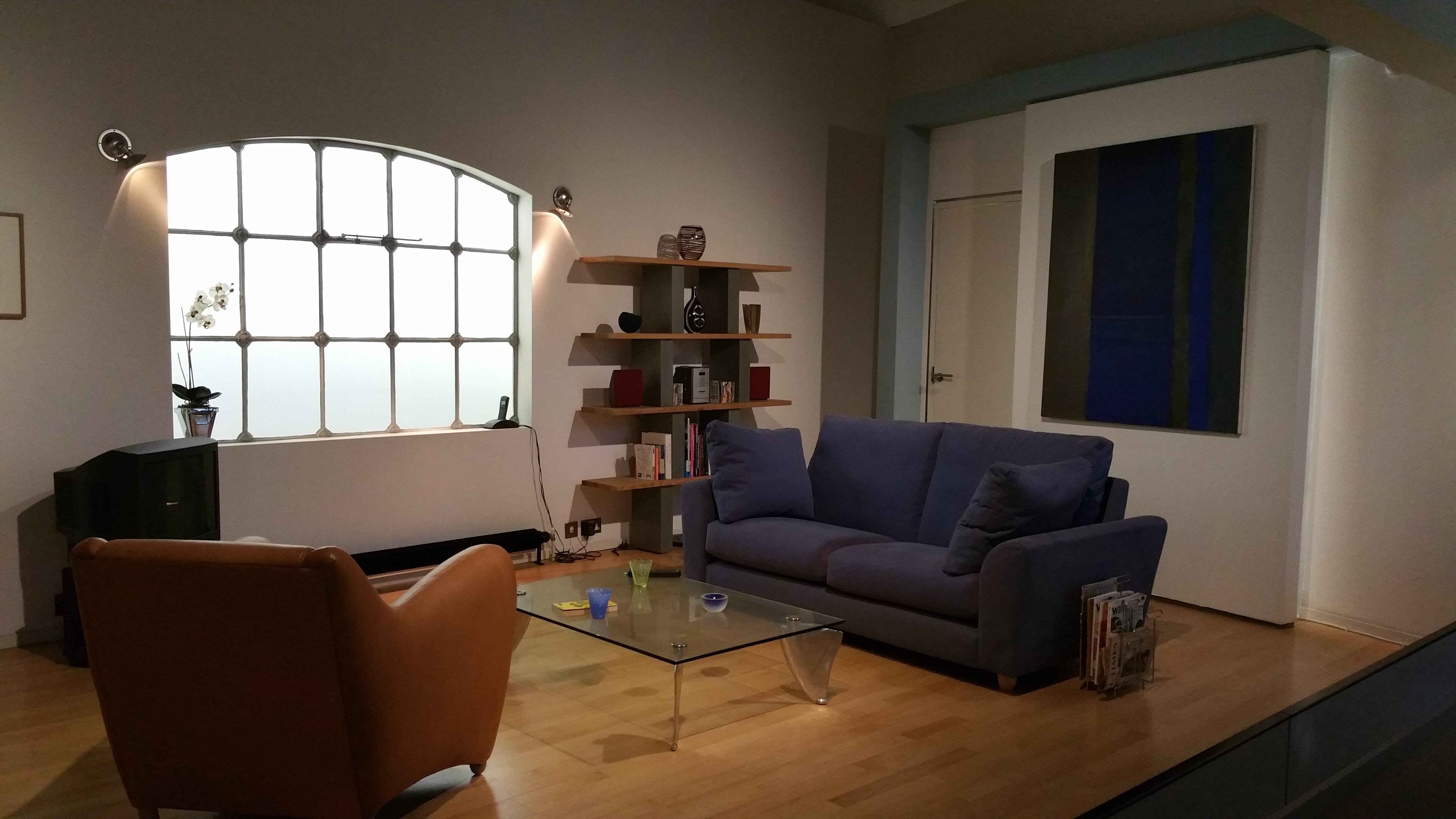

The blue IKEA sofa was everywhere at the time; it’s even in the Museum of the Home’s exemplary ‘90s living room. There was an awful lot of IKEA in Changing Rooms: cheap furniture that could be easily acquired and easily — if not competently — customised. IKEA was the furniture retail equivalent of MDF, a cheap and adaptable wood substitute without which Changing Rooms could not have existed.
Both these things were relatively new: IKEA first came to Britain in the late ‘80s, around the same time that MDF started in mass production. The potential audience for Changing Rooms was also pretty new. By the late ‘90s almost half of under-35 year olds in the UK owned their own home, and were looking for cheap furniture to put in it. This was pretty much the peak of home ownership in the UK. (Within a decade, we would discover that the cheap mortgages that had enabled this boom had been a very, very bad idea indeed.)
Even those of us who were still renting tiny flats (and the tiny TVs on which we were watching Changing Rooms) were sitting on our own IKEA chairs and eating our supper off IKEA crockery with IKEA cutlery. This was not just because IKEA was cheap and practical, but also because it was stylish: all Scandinavian simplicity and understated design. Wildly affordable stylish homeware had not previously been available to the British. You could have cheap and nasty things, or florid and expensive things. The only way you could get nice furniture cheaply was to buy it second hand, with free clothes moths thrown in. Or you could ‘salvage’ old furniture other people had thrown away, which is why our sofa smelt funny in damp weather. Cheap and modish was new, and undeniably exciting. Not to mention very handy for Changing Rooms.
Watching Changing Rooms was like wandering through the exploded house of an IKEA ‘Showroom’, with all its mocked up sitting rooms and bedrooms and kitchen/living spaces. Like a funhouse mirror version of the Museum of the Home, it offered a glimpse of all those other possible lives. It was a series of domestic dioramas, like looking out of the window of a suburban train: lives suddenly opened up before you and then carried away.
We were also watching Changing Rooms, to be frank, because it was on. With a choice of four TV channels and no internet to speak of, you watched what you were given. BBC2 went on at 6pm (the moment I got in from work) for Star Trek: The Next Generation, and then stayed on until I went to bed. I couldn’t think of anything else to do, and wouldn’t have been able to afford it if I could.
But the show also held a specific appeal for me, because I was working in design. My friends who got lost in the fuck-offs were buying furniture for their web design agency (another New Thing), and I ended up working there with them. Web design has a lot in common with interior design: people think it’s all about the visuals, but really it’s all about the usability, and if that’s done well you won’t notice it at all. There’s even language in common: screen furniture, wallpaper and, in those days, an awful lot of tables.1
I felt an intense empathy with the Changing Room designers in their battles with vague and incomprehensible briefs, small budgets and over-involved clients. (Design clients always think designing is easy, and they always refuse to believe that the professionals know what they’re doing.) The fevered invention, and the desperate search for anything that could be easily reused and repurposed, was all too familiar. Frankly, I admired their professionalism. They designed, as all practical designers must, for the audience: not the battling DIYers who were going to have to pay to have that room re-redecorated afterwards, but the audience at home. Their unhinged creations were not supposed to be good interior design; they were supposed to be backdrops for dramatic reveals. They were supposed to be good TV.
Changing
In 1962, the BBC bought a derelict semi-detached house in Ealing and filmed DIY guru Barry Bucknell as he spent a full year renovating it. In the Reithian frame of the BBC’s purpose this was more information and education than it was entertainment; Barry Bucknell was there to teach the nation how to Do It Themselves. Before the Second World War most Britons had lived in rented property, but after the war an increasing number owned their own homes (by the ‘70s this was the majority). They needed to know how to lay a path, plaster a wall and put up a shelf, and the BBC was going to make sure they did it properly, while wearing a tie.
The closest television got to Changing Rooms in the ‘60s was a show called, deliciously, In Your Place (1967), in which two interior designers pitched different ideas for remodelling a room. There were two amazing things about In Your Place: firstly, it was presented by voice-of-Dougal-and-father-of-Emma Eric Thompson; and, secondly, there was no competitive element. The two designers presented their designs, everyone said how interesting they both were, and then the show ended. The point was for the viewer to be introduced to new concepts in interior design, not for them to experience any dangerous excitement.
BBC2 was still proudly ploughing the gentle education furrow in the late ‘90s. (In fact there was probably a programme about gentle ploughing somewhere in the schedule.) On the day Changing Rooms first aired, the channel also broadcast an appreciation of the apple orchards at Wisley, a display by young sheepdog handlers, and a look at the pickles of Italy and Scandinavia called A Perfect Pickle Programme. Even the less rural programmes were still relentlessly responsible. In the same week, instead of engaging in heavy-handed banter and male status anxiety, Top Gear worried about the EU mechanism for setting car part prices.
The only other show on BBC2 that was remotely as fluffy as Changing Rooms was Ready, Steady, Cook, a show in which cooks were given random ingredients and a time limit and told to conjure a meal. There are no coincidences here: they were produced by the same man, a man who was about to launch the UK’s version of the Dutch reality show Big Brother. That man was Peter Bazalgette, the great-great-grandson of Joseph Bazalgette, a Victorian engineer best known for his totemic improvements to London’s sewerage system. In other words, both Bazalgettes have been instrumental in massive changes to British cultural and domestic life. Joseph helped take effluent away from people’s homes, while Peter… well, like an episode of Changing Rooms you know how this is going to end.
If we’re trying to be fair about it, there’s an argument that Bazalgette was attempting to redress an imbalance in the way Reith’s principles had been applied. For a long time, ‘entertainment’ had been deprioritised in lifestyle programming in favour of a whole lot of education and information. Shows like Changing Rooms and Ready, Steady, Cook, which introduced competition and ‘stakes’ into lifestyle programming, were intended to right that bias. And Changing Rooms did sometimes contain trace amounts of information. Instead of magically revealing a set of MDF bookshelves, ‘Handy’ Andy would occasionally stop and explain how he had done something. But the information was a bit like the oats in Honey Nut Cheerios: it wasn’t the point. It was just there to assuage any residual guilt we might have about consuming so much rubbish.
Here’s a proper documentary about ‘Handy’ Andy himself from Adam & Joe:
From one angle Changing Rooms looks very innocent these days: a spoonful of sugar in the high-roughage BBC2 diet. But it was actually the first tremor of the approaching cultural earthquake of Big Brother, the beginning of the end of Reithian broadcasting. Thirty years later, all lifestyle programming is some form of game show; the news is dramatic wallpaper; and every documentary features a replaceable celebrity going ‘on a journey’ to discover something you already know. Broadcast television thinks it can compete with internet video by deprioritising information and education. Meanwhile, what are we doing with this glut of streaming video? Watching reviews of power tools and DIY how-to videos on YouTube.
For a (slightly) more sober form of ‘90s lifestyle programming, there’s always people and their cars, instead of houses, and From A to B:
From A to B: Tales of Modern Motoring (1994)

TV and radio are are little boxes full of many kinds of friends: informative friends, entertaining friends, distracting friends, friends who just won’t shut up and go away. In our semi-regular TV re-watch feature, we take this metaphor and chases it into the ground with deadly intent.
This is a joke exclusively for people who built websites in the ‘90s, but that’s me, so it’s staying in.
The alternative to florid and expensive was Conran’s Habitat: but you paid up the wazoo.
Fascinating and very funny. I woke my husband -- am I still allowed to say husband? -- cackling about the Bazalgettes' sewage shoveling. But also, like all good nostalgia, this made me sad. Following events best I could from the States, I.remember the advent of Big Brother, and thinking "what the hell is this?" I could easily believe Brits would watch it -- I grew up in a New Town-- but not that the Beeb would show it, even after Changing Rooms, which I loved (yeah . . ) Of course, these days, I now regularly come to believe at least six impossible things before breakfast.
P.S. Oh, wait, Big Brother was on Channel Four. I've been living a lie all of these years. Thank goodness! So let's look at the good old BBC .... AIEEEE! 😱